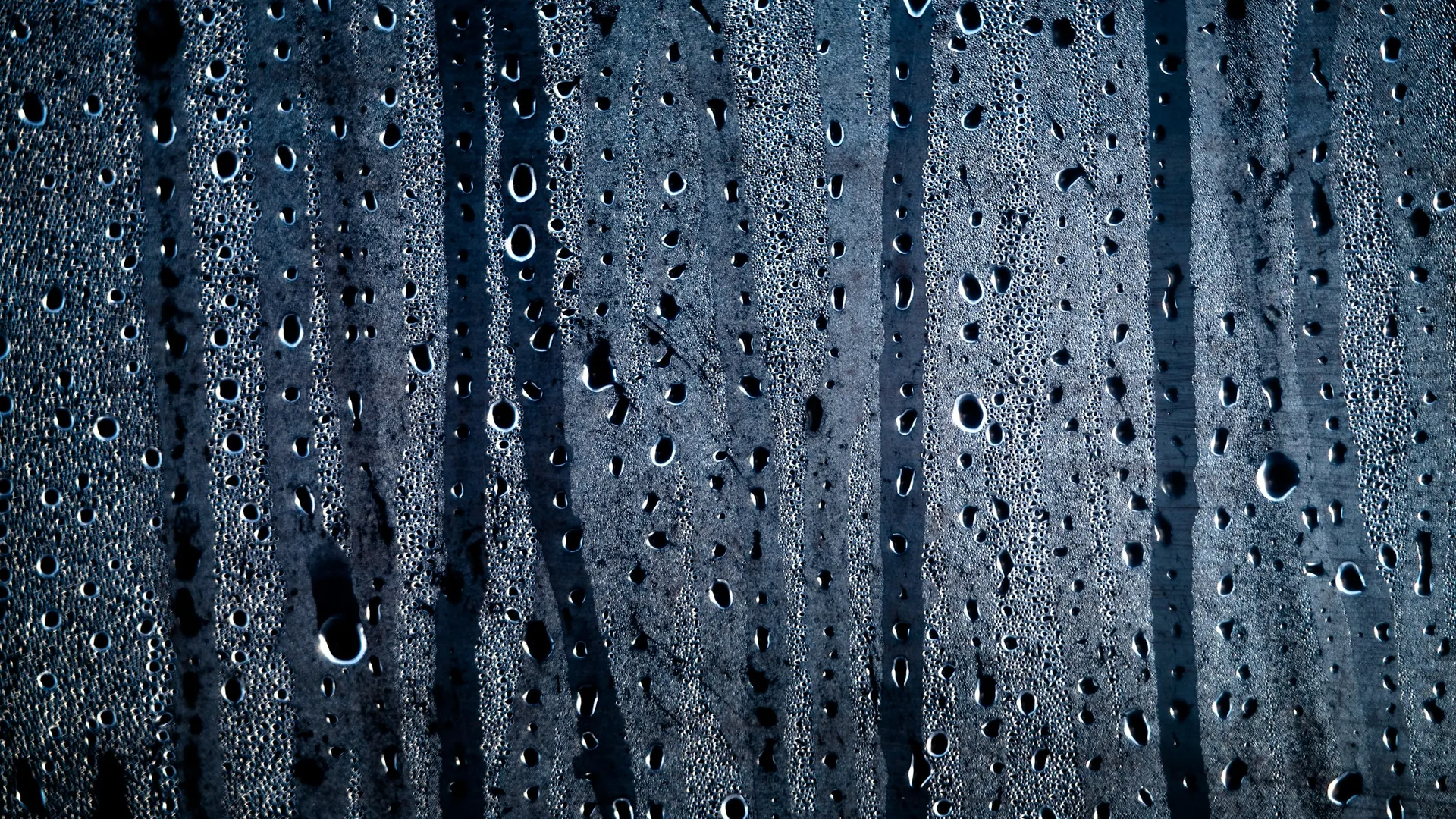
Short answer: yes, in most homes a gun safe needs a dehumidifier. A safe is a sealed steel box, and the fireboard in its walls holds moisture; without help, the air inside gets damp enough to rust blued steel. There are two kinds. A heated rod warms the air a few degrees and needs an outlet. A desiccant, loose or in a rechargeable canister, absorbs moisture and needs nothing but a reminder to dry it out. Of the full-size safes we compare, only the Steelwater Heavy Duty 20 ($1,399) includes a dry pack, and the Rhino Kodiak has a power outlet inside.
Do you really need a dehumidifier in a gun safe?
If your safe sits in a basement, a garage or anywhere without air conditioning, yes. Rust needs steel, oxygen and moisture, and a closed safe has all three. The door seal that helps in a fire also keeps damp air in once it gets there, and it gets there every time you open the door on a humid day.
In a dry, heated room the risk is lower, and plenty of owners in dry climates run a safe for years with nothing but a wipe of oil on each gun. The cheap way to know which case you are in is a small humidity gauge on a shelf. Many owners aim to keep the reading around 50% or a little below; that is common practice, not a figure from a standard.
How does a heated rod work?
It is a low-power electric heater in the shape of a rod, fixed near the floor of the safe. It doesn't remove water. It warms the air inside by a few degrees so that moisture doesn't condense on cold steel, and the gentle convection keeps air moving. It runs all the time and needs no attention.
The catch is the cord. The safe needs an outlet nearby and a way in for the cable. Steelwater lists a dehumidifier hole on the Heavy Duty 20, and the Rhino Kodiak comes with an internal electrical outlet, which makes a rod a two-minute job. On other safes, ask whether the body has a pass-through before you buy the rod.
How does a desiccant work?
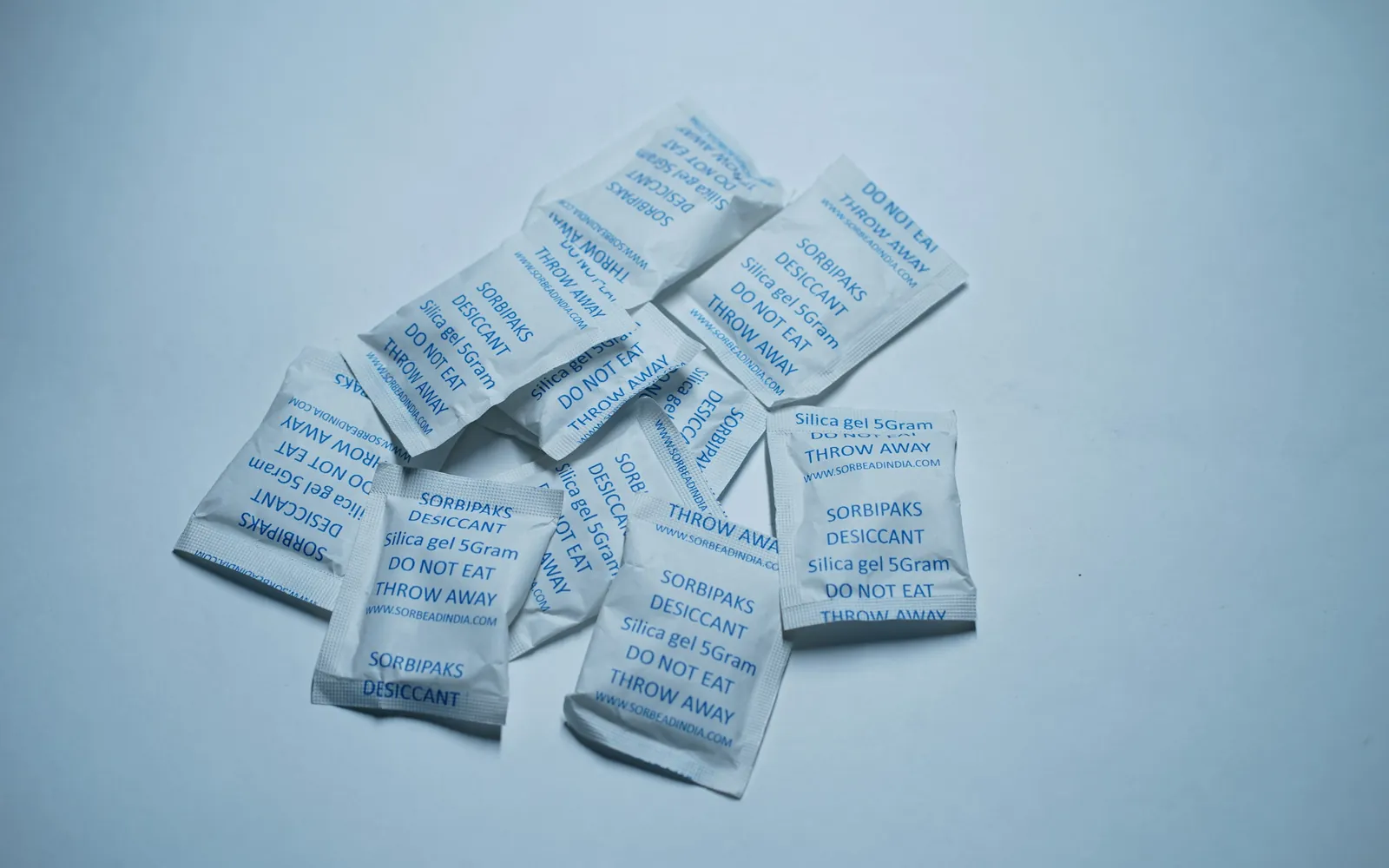
A desiccant is a material that takes water out of the air and holds it, usually silica gel. It comes loose in a tub, in a bag, or in a plastic canister with an indicator that changes color when it is full. Rechargeable ones are dried out in an oven or plugged into a wall socket for a few hours, then put back.
Nothing to wire and nothing to fail, which suits a safe with no outlet. The catch is discipline: a saturated desiccant does nothing, and in a damp basement a small one fills up in weeks. Steelwater ships a 200 g rechargeable silica pack with the Heavy Duty 20, which is a start; a large safe may want more than one.
Video: "Best Safe Dehumidifiers: Stop Humidity, Rust & Moisture Damage", Dean Safe on YouTube. Not made by us; chosen because it shows the safe or the topic clearly.
Rod or desiccant: which should you choose?
Choose by the room, not by the safe. With an outlet within reach and a pass-through in the body, a rod is the fit-and-forget answer for a full-size safe. Without power, a rechargeable desiccant canister is the answer, with a calendar reminder to dry it.
In a truly damp place, many owners use both: the rod to keep the air moving and the desiccant to take water out of it. For a small handgun box, a pouch of silica gel is all that fits, and all you need. Whichever you pick, the gauge tells you whether it is working. If the needle stays high, add capacity before you see orange on a barrel.
Which gun safes come ready for a dehumidifier?
Fewer than you would hope. Reading the product pages on November 13, 2026, we found one full-size safe with a dry pack in the box, the Steelwater Heavy Duty 20, and one with a powered outlet inside, the Rhino Kodiak KGXR5933 ($2,449). Liberty's lists for the Centurion 24 and the USA 30 mention neither lighting nor a dehumidifier, and Browning's list for the Sporter 23 doesn't either; the brands sell them as accessories.
So budget for one. It is a small line next to a $1,969 safe, and it protects what the safe is for. Our reviews say, safe by safe, what is in the box and what is not.
How much does it cost to keep a safe dry?
Very little next to the safe itself, which is why skipping it is a false economy. A humidity gauge, a rod or a canister are small accessories; brands such as Liberty sell their own, and generic ones fit any safe. We don't rank dehumidifiers and we haven't read their makers' pages, so we won't quote prices or name a best one here.
What we can tell you is what to check on the safe before you buy the accessory. Is there an outlet inside, as on the Rhino Kodiak? Is there a hole for a cord, as Steelwater lists? Does the safe arrive with a dry pack, as the Steelwater Heavy Duty 20 does? If the answer is no three times, plan on a rechargeable desiccant and a gauge from day one. The Liberty USA 30, our No. 1 at 9.3/10, is in that case, and it is still the safe we would buy: a dry pack is easier to add than steel. See the whole list in our ranking of the best gun safes.
What else keeps rust out of a gun safe?
Habits, mostly. Wipe guns down before they go in, since fingerprints carry salt and moisture. Don't store them in foam-lined cases or leather slings inside the safe; both hold damp against the metal. Leave a little space between guns so air can move, which is one more reason not to believe a brochure's maximum capacity.
Keep the safe off bare concrete if you can, on a rubber mat or a wooden platform, and still bolt it down through it. And open the door now and then on a dry day. A safe that is used is a safe that gets looked at, and rust caught in the first week wipes off.
The safes in this guide, side by side
| Safe | ||||
|---|---|---|---|---|
| Capacity | 20 long guns (claimed) | 41 long guns (claimed) | 30 long guns (claimed) | 35 long guns (claimed) |
| Body steel | 12-gauge steel | 12-gauge steel | 12-gauge steel | 12-gauge steel |
| Fire rating | 60 min at 1,875°F (brand's claim) | 60 min at 1,400°F (brand's claim) | 60 min at 1,200°F (brand's claim) | 60 min at 1,400°F (brand's claim) |
| Ways to open | Keypad + Key | Keypad | Keypad | Keypad |
| Approvals stated | CA DOJ | UL RSC + CA DOJ | UL listed + CA DOJ | UL RSC + CA DOJ |
| Weight | 453 lb | 536 lb | 565 lb | 594 lb |
| Warranty | Not stated | Lifetime | Lifetime | Lifetime |
| Sold by | Steelwater | Rhino | Liberty Safe | Winchester Safes |
| Where to buy | Check price at Steelwater | Check price at Rhino | Check price at Liberty Safe | Check price at Winchester Safes |
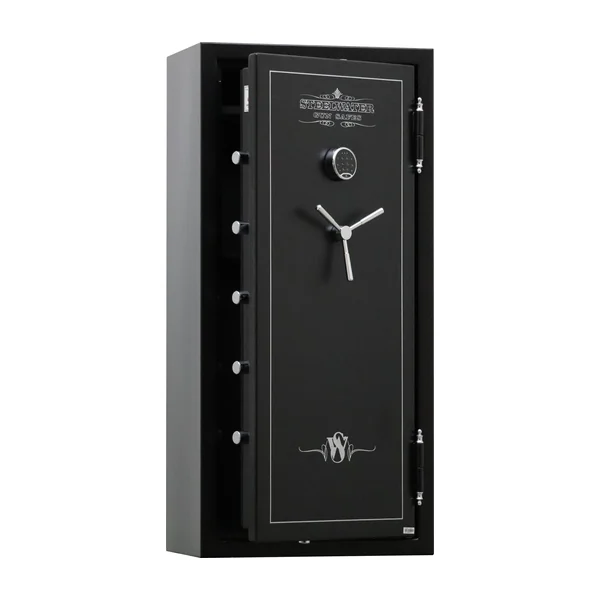
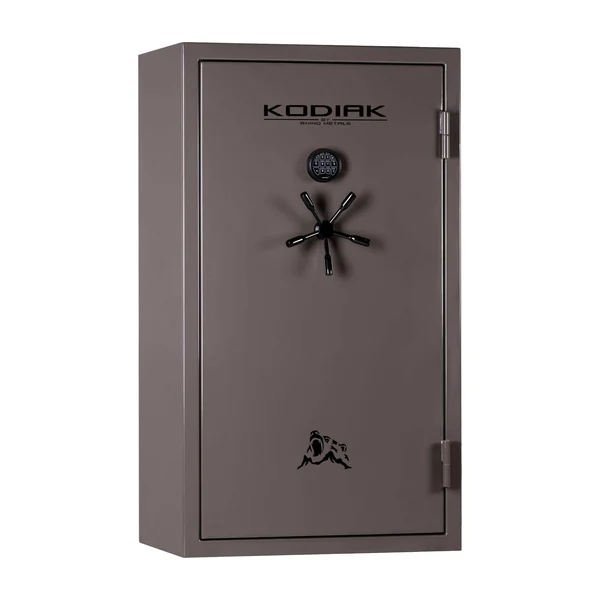
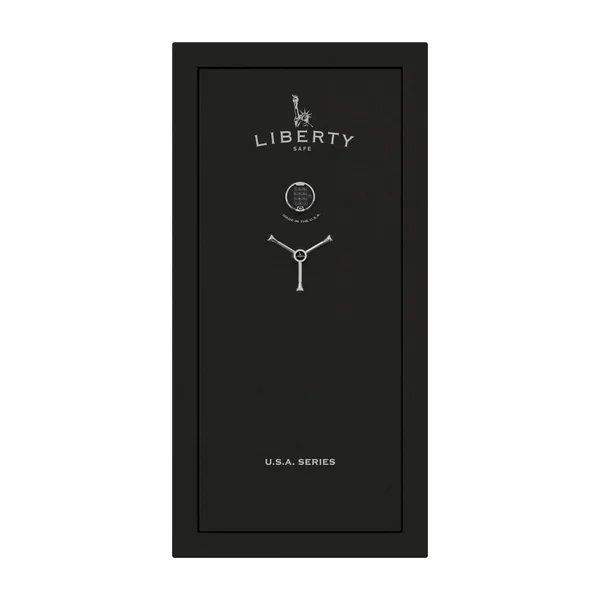
✓ marks the best figure of the row. Fire ratings and capacities are the brands' own claims. Prices checked November 13, 2026 at the seller named in the table.